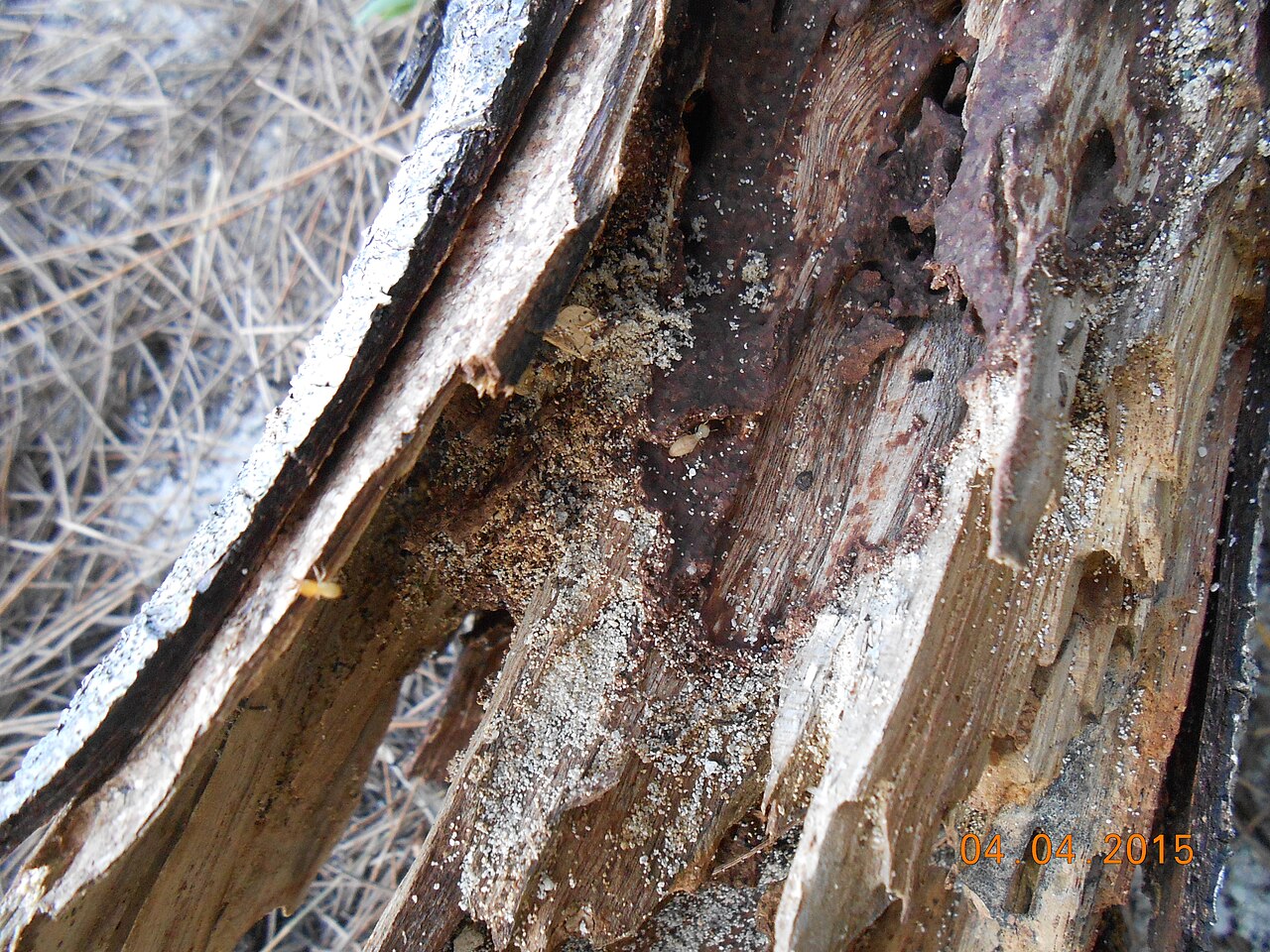
Termites
Termite Treatment in Porterville, CA
The San Joaquin Valley runs two termites at once: subterranean termites up from the soil and drywood termites already in the attic. Porterville homes get both.
Termite treatment in Porterville is a two-front job, because this part of the Central Valley has both subterranean termites working up from the soil and drywood termites living inside the wood itself. A single-family stucco home near downtown or out toward Springville can carry either or both, and they are found, and treated, in completely different ways.
The two termites Porterville actually has
Subterranean termites nest in the ground and need soil moisture. In Porterville they follow the water: a leaking hose bib, an irrigation line, a flower bed against the slab, a lawn watered through a 100-degree summer. They build pencil-width mud tubes up the foundation and into the framing, and on a slab home those tubes run behind the stucco where nobody looks. They are the most common structural termite in the valley.
Drywood termites are the other half. They fly in, land on bare or gapped wood, and set up a colony inside the wood with no soil contact at all, the attic, the fascia, the eaves, a wood fence, a stack of firewood. The tell is not a mud tube but tiny piles of hard six-sided pellets, like coarse sand, under the infested wood. Older Porterville homes and anything with exposed rafters or trim are the usual drywood targets.
The signs, and why they get missed
Both termites work out of sight and from the inside out, so most Porterville homeowners see nothing until a swarm, a probe, or a real estate inspection reveals it. Valley termites swarm in warm weather, often after the first irrigation or a spring rain, and that swarm is the loudest warning either species gives. If it happens at your house, a colony is on or in the structure.
- Pencil-width mud tubes on the foundation, a pier, or the garage slab edge mean subterranean termites
- Small piles of hard tan pellets, six-sided, under eaves, window sills, or attic wood mean drywood termites
- A spring or summer swarm of winged termites indoors, or shed wings on a windowsill
- Wood that sounds hollow when tapped, or paint that blisters and ripples over a stud
- A discarded frass pile is drywood; a mud tube is subterranean, and the difference decides the treatment
How a local exterminator treats termites here
The inspection is the real work, and it splits by species. For subterranean termites an experienced local exterminator walks the slab perimeter, the plumbing penetrations, the water heater, and the irrigated beds, then treats with either a continuous liquid termiticide zone in the soil around the foundation or an in-ground bait system the colony shares and carries back underground. For drywood termites the fix is different: localized treatment of the infested wood, or for a widespread attic infestation, whole-structure fumigation.
Then the moisture and wood-contact corrections, because valley termites follow both. Fix the dripping hose bib, move the mulch and soil back off the stucco, keep irrigation from spraying the foundation, and pull firewood away from the wall. A termite treatment without those corrections is a treatment you repeat, especially through a long hot Porterville summer of daily watering.
Home sales, WDO reports, and timing
A great many Porterville termite discoveries happen during a home sale, when a licensed inspector fills out the wood-destroying-organism report that California buyers and lenders ask for. Finding active termites at that stage turns a manageable pest issue into a repair-and-clearance problem on a deadline.
Termites are the one pest where the cheapest time to act is always now. Calling when you see a tube or a pellet pile costs a treatment. Waiting until the buyer inspection finds the damage costs a treatment plus repairs plus a weaker hand at the closing table. On a valley stucco home, that difference is real money.
Read more on What pest control costs in Porterville and why, or call 559-219-0184 and describe what you are seeing.
Related
People who called about this also called about
Questions
Termites in Porterville, answered
How do I tell subterranean from drywood termites?
Look at what they leave. Subterranean termites build pencil-width mud tubes on the foundation and need soil contact. Drywood termites leave small piles of hard six-sided pellets under the infested wood and live entirely inside it. They are treated differently, so a local exterminator confirms which one you have before quoting.
Do I need fumigation or can it be treated locally?
It depends on the species and how far it has spread. A small, localized drywood infestation can often be spot-treated. A widespread drywood infestation through the attic may need whole-structure fumigation. Subterranean termites are handled with a soil termiticide zone or a bait system, not fumigation. The inspection decides.
Why do I have termites when it barely rains here?
Valley termites follow irrigation, not rain. Daily summer watering, a leaking hose bib, or a bed watered against the slab gives subterranean termites all the soil moisture they need, and drywood termites do not need soil moisture at all. Porterville is prime termite country because of the heat and the watering, not in spite of the dry climate.
How long does termite treatment last?
A properly installed liquid termiticide zone protects for several years, and a monitored bait system continues as long as it is serviced. Both depend on the treated zone staying intact and on fixing the moisture and wood-to-soil contact that drew the termites in the first place.
Talk to a local exterminator
Call and describe your pest problem
Tell us the pest, the property and how long it has been going on. You get straight answers and an honest estimate before any work starts. No obligation.
Calls answered 7am to 9pm, seven days a week